
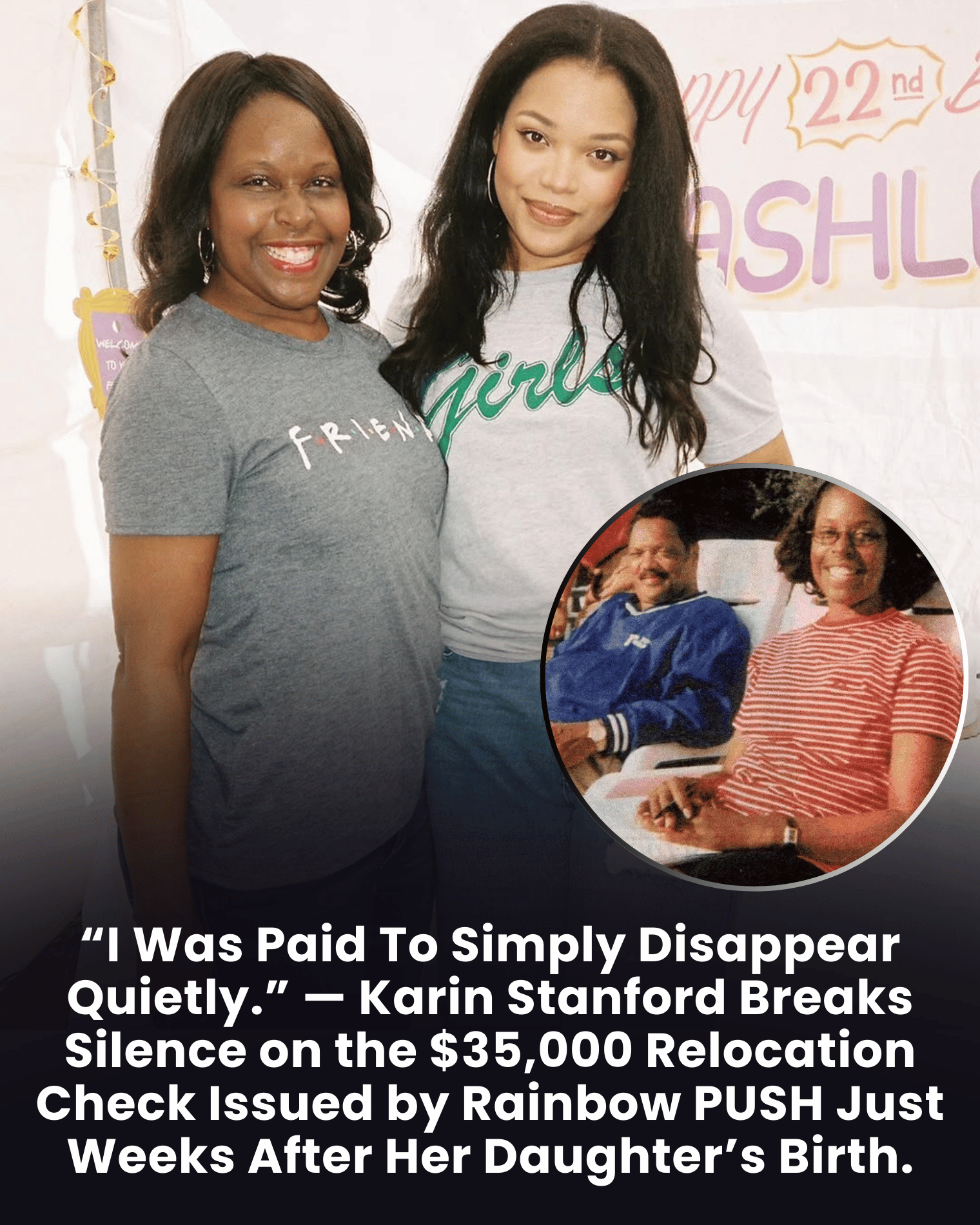
In the turbulent aftermath of one of the most controversial personal scandals to touch the American civil rights movement, Karin Stanford has once again revisited a chapter of her life that placed her unwillingly at the center of a national firestorm. Years after the events that thrust her name into headlines across the United States, Stanford has spoken about the difficult period surrounding the birth of her daughter and the relocation payment that later ignited widespread scrutiny of the Rainbow PUSH Coalition.
Stanford, a former staff member of the organization founded by civil rights leader Jesse Jackson, says the experience reshaped her life in ways she never anticipated. According to her account, the situation unfolded quietly in 1999 when she was working within the organization. At the time, she says she received a $35,000 relocation payment from Rainbow PUSH Coalition and moved to Los Angeles shortly after the birth of her daughter.
What seemed like a private arrangement soon became the subject of intense public attention. When the payment became public knowledge, it triggered widespread questions from the media and eventually led to financial reviews and audits of the organization. News outlets across the country examined the coalition's internal finances and governance, transforming what had been a deeply personal situation into a national controversy.
For Stanford, the emotional consequences were immediate and severe. She has described the period as isolating, saying that the sudden exposure left her navigating motherhood, public scrutiny, and professional uncertainty at the same time. While many observers focused on the political implications for the civil rights organization and its leadership, Stanford's personal circumstances received far less attention.
The media coverage in 2001 intensified the spotlight even further. By then, the story had expanded far beyond its original scope, with commentators debating the ethical and financial implications surrounding the relocation payment. For Stanford, however, the focus remained on rebuilding stability in her own life. She has said that during those years she attempted to step away from the public narrative entirely, focusing instead on raising her daughter and restoring her academic and professional path.
Stanford's reflections highlight how major political or organizational controversies often carry deeply personal consequences for individuals involved behind the scenes. While public debate frequently centers on leadership figures and institutional accountability, those who become connected to such events can experience long-lasting disruptions to their careers, reputations, and private lives.
Over time, the broader controversy surrounding the relocation payment became part of the historical record of the coalition's internal challenges during that era. For Stanford, though, the story is less about the headlines and more about the personal cost of becoming entangled in a moment that quickly spiraled beyond her control.
Looking back, she has emphasized that the experience forced her to rebuild from the ground up. Moving across the country, raising a child, and attempting to reestablish a career required resilience in the face of intense scrutiny. The episode remains a reminder that behind many widely reported political controversies are individuals whose lives are permanently altered long after the media attention fades.