
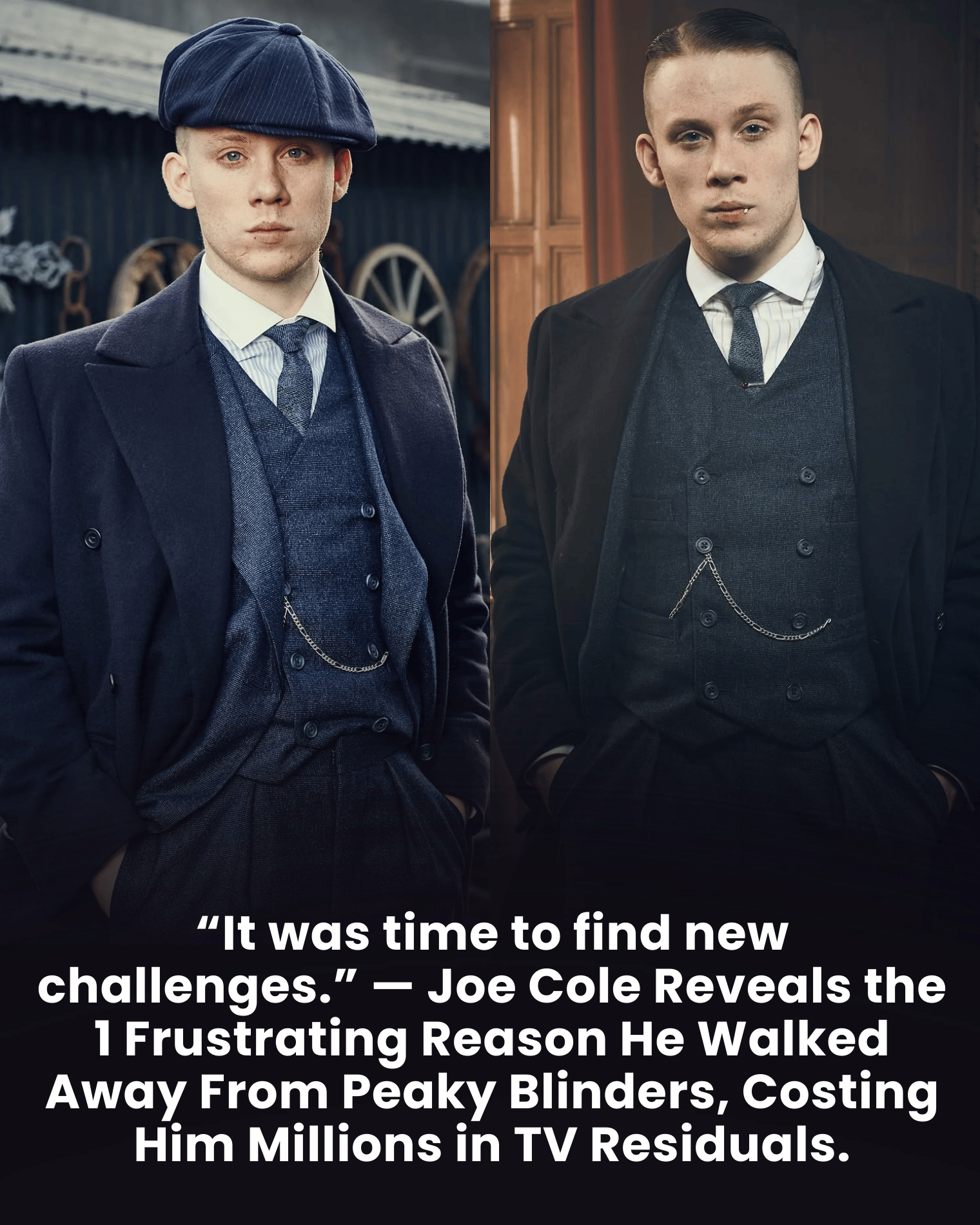
Joe Cole's departure from Peaky Blinders remains one of the most surprising turning points in the show's history. For many viewers, John Shelby was one of the series' most magnetic figures—dangerous, loyal, impulsive, and impossible to ignore. So when the character was suddenly killed off, fans were stunned. The loss felt enormous. Years later, Cole's own explanation added a new layer to that shock: leaving was not simply about moving on, but about the frustration of feeling boxed in creatively on a series that increasingly centered on one man alone.
Reflecting on that period, Cole made it clear that he had deep respect for the show and for what it became. At the same time, he recognized a hard truth about his position within it. In his eyes, Peaky Blinders had evolved into Cillian Murphy's vehicle, with Tommy Shelby standing at the center of every major emotional and narrative development. That creative reality left little room for John to expand beyond his function as a compelling but secondary presence. For an ambitious actor eager to test the full extent of his range, that limitation became impossible to ignore.
Cole's decision was especially bold because walking away from a global hit is never a simple move. Staying on Peaky Blinders could have meant years of security, continued fame, and the kind of long-term television residual value most actors would never willingly surrender. A successful series offers not only visibility but also stability, and giving that up carries real professional risk. Yet for Cole, the bigger danger seemed to be remaining comfortable. He did not want to be remembered merely as an effective supporting player in someone else's legend. He wanted to find out whether he could carry the weight of a project himself.
That gamble led him toward Gangs of London, a far darker and more brutal crime saga that gave him the central space he had been craving. There, Cole was no longer orbiting another star's character arc. He had to command the screen, drive the conflict, and hold the audience's attention as a lead. It was a major test, and one that ultimately reshaped how many people viewed him. Rather than being "the guy who used to be in Peaky Blinders," he emerged as a performer capable of anchoring an entire series with force and authority.
His exit from Peaky Blinders therefore looks very different in hindsight. What once seemed like a shocking character death now feels like the visible result of a much deeper personal and artistic choice. Cole did not walk away because the show lacked quality or impact. He walked away because success alone was not enough. He wanted challenge, risk, and the chance to build something that belonged more fully to him.
In an industry where many actors cling to safe roles for as long as possible, that decision stands out. Joe Cole gave up comfort, money, and one of television's most beloved worlds in order to chase growth. It was a risky move, but it proved one important point: he was never content to remain in the shadow of Tommy Shelby.